Slovakia Records Highest Number of Rare Great Bustards in Over 50 Years
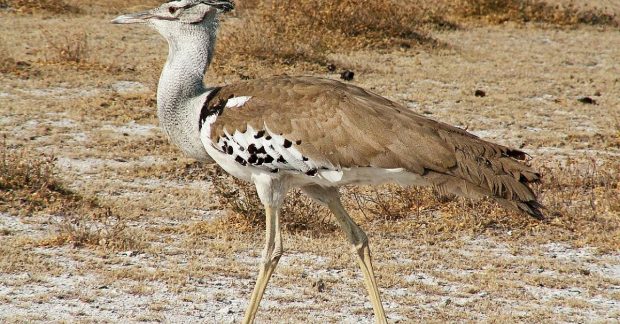
Ornithologists in Slovakia have counted 638 great bustards at a protected nature site, marking the best result since 1973 thanks to long-term conservation efforts.
 🏙️City
Photo: UNIAN
Key points
- Slovakia counts 638 great bustards, a record since 1973
- Population recovers due to habitat restoration efforts starting in 2017
- Great bustards are among the heaviest flying birds and nest on the ground
European conservationists have recorded a significant population rebound for one of the world's heaviest flying birds, the great bustard. At the Sysľovské polia protected area in Slovakia, experts counted 638 individuals. This result is a regional record for the past fifty years, as the last time comparable numbers were registered was back in 1973 when 697 birds were documented. Researchers note that at the beginning of the current century, the species was on the brink of extinction due to human impacts and the loss of suitable habitats.
History of Decline and Recovery
The decline in bird numbers began early in the last century due to rapid changes in agricultural practices. Extensive infrastructure development, intensive farming, and the destruction of natural field boundaries led to a dramatic drop, leaving only 129 individuals across the border region of Slovakia, Austria, and western Hungary by 1996. The situation was particularly severe in Slovakia, where birds failed to nest at all for nearly a decade due to the lack of safe environments.
A turning point came in 2017 when conservation organizations and local farmers joined forces to restore natural habitats. Areas began to be sown with grass, and new meadows were established where the birds could safely forage and build nests. As a result, the border region has transformed into a crucial wintering ground for more than three quarters of the regional population.
Environmental Significance and Future Challenges
Despite the success of these conservation initiatives, ornithologists emphasize that ongoing efforts are still required to protect the species. Because of their large size and habit of nesting directly on the ground, great bustards remain extremely vulnerable to intensive farming operations and dangerous power lines.
Source UNIAN — unian.ua/curiosities/drohva-v-yevropi-chiselnist-odnogo-z-nayvazhch… ↗
Read next
 🇺🇦Ukraine
Ukrainian Agricultural Sector Faces Bankruptcy Risks Amid Export and Financial Crisis
Ukrainian farmers are depleting financial reserves due to Black Sea logistics hurdles and plunging grain prices, threatening widespread bankruptcies by spring.
 🇺🇦Ukraine
Kremlin's Latest Nuclear Threats: Medvedev Outlines Conditions for Preemptive Strike
Dmitry Medvedev, Deputy Chairman of the Russian Security Council, has once again resorted to nuclear rhetoric, outlining scenarios under which Russia might consider using…
 💼Economy
Ivano-Frankivsk region addresses heat tariff deficit debts
A regional commission has reviewed and validated the debt figures of heat supply companies caused by the tariff gap for residential services.
 🧠AI Analysis
Videos Over Verdicts: SAPO Prosecutor Praises NABU Media Team Amid Criticism
SAPO prosecutor Rostyslav Batyh praised NABU's video editors when questioned about weak evidence in high-profile corruption cases.
 🧠AI Analysis
The Kremlin First Comments on the Destruction of the 'Merkuriy' Corvette Near Libya
Russian Presidential Press Secretary Dmitry Peskov has first addressed the strike on the Russian missile corvette 'Merkuriy' off the coast of Libya, redirecting questions…
 ⚽Sport
ATP Finals Review: Alcaraz Dominance and the Prospects of New Generation
Spanish tennis player Carlos Alcaraz triumphed at the ATP Finals without a single defeat, proving his elite status. Experts analyze the tournament outcomes, highlighting …